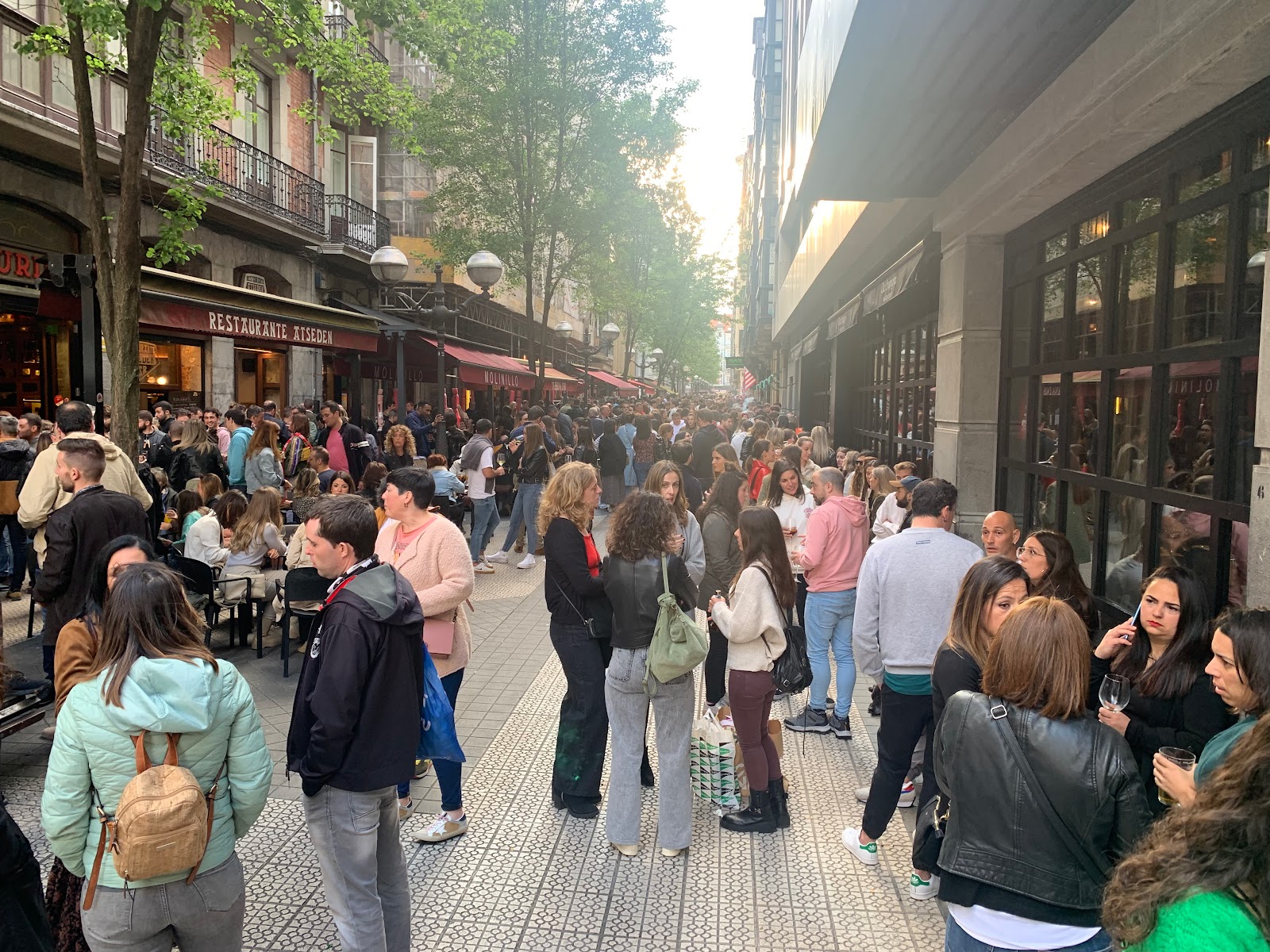
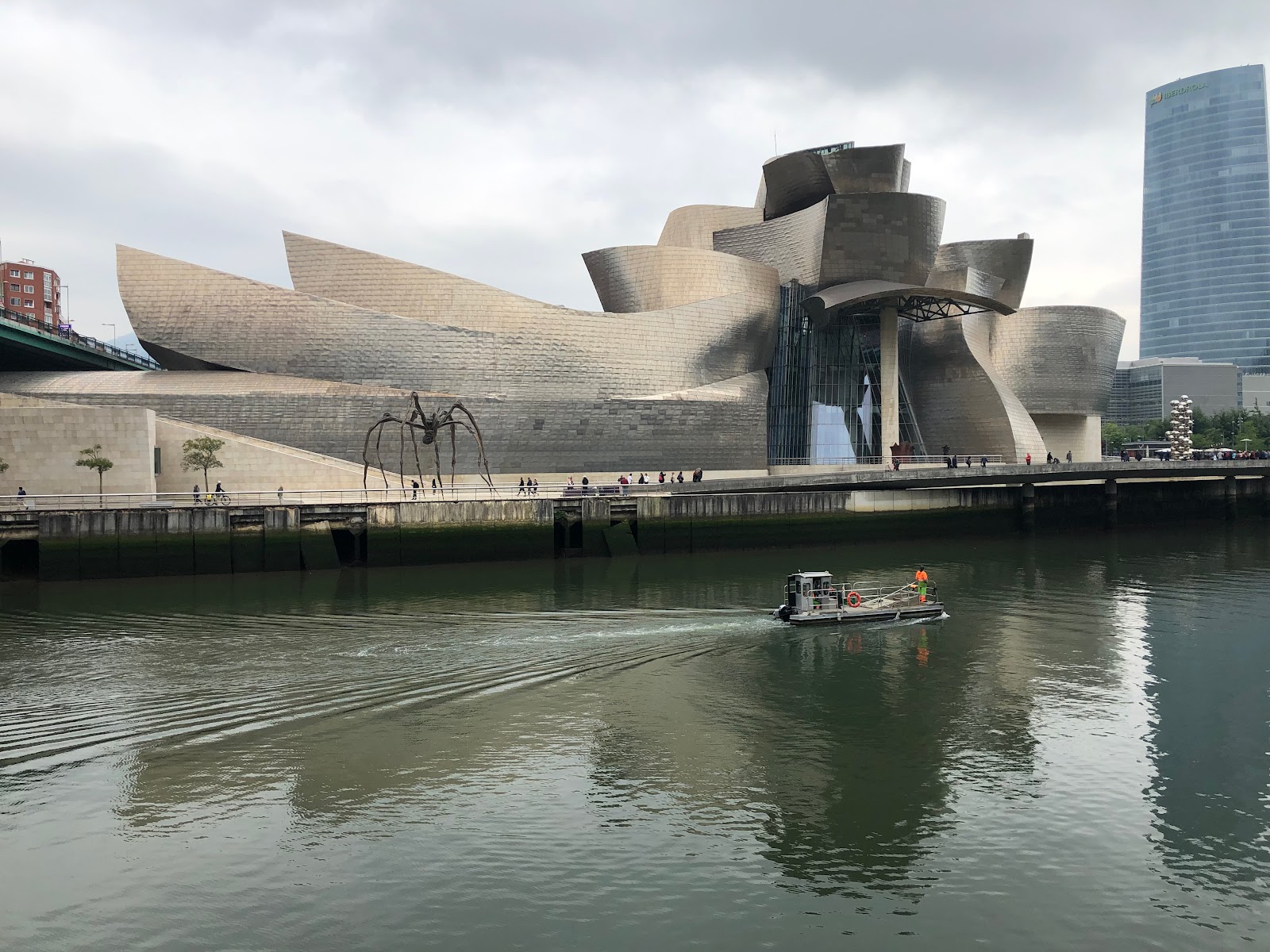
Beyond Bilbao: Vamos a Asturias!Bilbao is a fascinating city - but we came to find the "green" beyond. The provinces of Asturias and Cantabria are known for this, and in particular the Picos de Europa - a national park covering a large part of the Asturian region - where bicycling can mean backroads with nary a car (OK, one or two every hour), hikes with forests and meadows and mountain peaks in every direction, glimpses of ocean, and pastoral landscapes that are part of a long agricultural tradition.

And we found that sweet spot right away: our lovely eco-agricultural farm hotel, Posada del Valle, just above Arriondas in a rustic farming town. Old stone work building, renovated and updated by the new owners, Ernest and Annelize, who emigrated from South Africa to Spain to find a more peaceful place for their family. We were entranced from the moment we stepped out, and this became "home" for us for the next week. along with our friends Brigitte and Hal, who joined us the next day. The kindest hosts one could imagine, wonderful rooms with views across the valley, and utterly brilliant, sustainably sourced food: breakfasts, packed lunches if desired, and dinners to die for. Really. Amuse bouche to soups to entrees to desserts. And that home baked bread every single day. Swoon. And in accommodating special requests, better vegan recipes than Juliet makes for herself.

"Rustic" and "farming" include a number of common sights around here. For example, sheep. Our hosts have about 70. And they are special sheep - the Asturian native Xalda. (for a true history lesson, try this site: Xalda.com ). One of the oldest sheep breeds in Spain, and in the 12th century, numbered close to 6000. However, the population plummeted due to changes in farmers' breed choices, landscape management, and more - and by the early 1990s the Xalda were on the verge of extinction, at about 400 individuals. Aggressive government protections have resulted in a rebound, with current numbers at around 1700.
This is good. Mostly. Except when you don't want sheep. Indeed, they are really cute (see above), and are VERY vocal (every morning, evening, and during the day). We found them charming. But they also eat enormous amounts of vegetation, and under the law, there are extremely strict regulations about selling your sheep, to ensure that the breed continues to thrive. Our hosts inherited the sheep as part of the farm purchase two years ago (and had to take them on as part of that purchase). But dotting the "i"s and crossing "t"s with protected sheep turns out to be a major hurdle in selling them to enthusiastic new owners (who are out there). Some of the sheep were mis-tagged by the previous owner, some were double-tagged, some weren't tagged at all - and NO sheep can leave the farm until ALL are properly accounted for and labelled. Right. It's a special kind of farming nightmare.

Asturias - and all of Spain - also has cows. So many cows. Everywhere. According to one reliable consumer goods source, about 6 million of them across the country, and roughly 375,000 of those are in Asturias. Since Juliet is vegan/vegetarian, and Phil almost fully vegetarian, the whole beef thing isn't part of our vernacular, and we're very light on dairy (fantastic plant-based dairy now available! Ask us!). So we see a lot of cows eating a lot of grass (methane, anyone?), and land being cleared for grazing, all of which overwhelms the regeneration of native plants, forests, and biodiverse landscapes. On a smaller scale, this could be done much more sustainably. But cows are all over the national parks as well, and while we adore their big, soft eyes, their goofy calves, and the cowbells resonating across the valleys, there's gotta be a better way forward for everyone and all species.
There are quite a few horses around too. Check out these ponies. Long bangs are in style, obviously. They don't look so practical to me, but since when has fashion been about practicality?


The photo below shows an "horreo", a type of rat-proof granary that has been used here since the 1200s. It is elevated on pillars at the corner, and each pillar is topped by a large flat stone. Rats can climb the pillar but can't get around the stone. There are still many thousands of these, many of them still in use.

Lest it seem we're way too caught up in culture and history and quirks of the region, never fear...we made sure to explore every day, in every way. Brigitte and Hal (married to each other) are both very dear, long-time friends - and also tremendous traveling companions. So we hiked, biked, kayaked, walked, talked, and laughed...a lot. Phil and Hal go many years back doing hard-core cycling adventures together, and Brigitte and Juliet even further back in time (yipes), as best friends in high school, meeting by the fortune of last names next to each other in the chorus (La.. and Le..) - and from there it really is history.

We headed up into one of the famous sites of the Picos right away: Lagos de Covadonga. Phil and Hal actually biked up to the lake. The Lagos de Covadonga climb has been featured many times in the Vuelta a Espana (the Spanish equivalent of the Tour de France), and just a month ago it was the final climb on the final stage of the Vuelta Feminina (https://www.youtube.com/watch?v=DRY_b7i9HZw ). Fortunately Phil and Hal had nicer weather and were able to enjoy the scenery as they climbed.
Climbing a famously tough mountain was a bit more than Brigitte and Juliet wanted to do, so they drove up...but we all met up top, and then did two hikes around a mountain lake, and through an old mine site that looked a lot like something out of a Lord of the Rings hobbit scene.


And of course we have to have a picnic in the mountains! Always!

On the way down, we went to the famous Basilica de Santa Maria la Real de Covadonga - easily one of the most impressive church locations we've ever come across. Spectacular against the backdrop of towering green hills. And also turns out to be the location of the Battle of Covadonga (718 or 722 AD), which was between (and we kid you not) the Army of Pelagius the Visigoth (the Asturian good guys) and the Army of the Umayyad Caliphate (the invading Moors). (Note: now we all know where current video games get their names). Because of the high elevation and fortress-like construction of the church, Pelagius and his small band of fighters were able to battle the invading army by "shooting arrows and stones from the mountains," and in short, the "good guys" beat the "bad guys," and this was considered the foundational moment of the subsequent Asturian kingdom. Though to be fair, there was a lot of marauding and bloodshed on both sides - so that whole "good guys" "bad guys" thing gets very fuzzy.

If you click on the photo below (to see it full size), you will see that Friday mass is being held inside a cave high up the cliff, just behind the yellow building. This was being broadcast on TVs in the church, but there were a number of people (including the priest) who were at the in-person service. Unlike in the US, where to do this you would probably have to sign waivers about falling off cliffs, and/or simply prohibited from doing this at all, there were choirboys and various religious assistants up there as well, and people sitting next to a small black iron fence that maybe - maybe - came up to Juliet's waist height. We're definitely not in Kansas anymore.

We also stopped off in the bustling town of Cangas de Onis, which has this cool bridge. There used to be a Roman bridge here, the foundations of which were used for the new bridge that was built in the medieval period, and that you can still walk over today.


They are big on cheese around here. Hal and Phil ordered "sliced tomatoes with cheese" at a restaurant, expecting something like a Caprese salad, but instead they got slices of tomato with cheese.
Cider is also very popular in the area --- many places advertise themselves as "sidrereas" and every restaurant serves local sider. Phil gave it a try (note the green glass bottle). The cheap stuff, which is everywhere, tastes terrible: very vinegary. The locals seem to like it that way, or at least to not mind it, but Phil says it's well worth paying more for the good stuff.

Although you're welcome to pour your own cider, the right way to do it is to summon the waiter over. He pours about two inches into the glass from a great height -- spilling only a few drops, and the most skilled waiters don't look at the glass while they do it -- in order to aerate the cider, which is very slightly fizzy.

Evidently many Asturians have a sweet tooth (like us!): flan is on just about every menu, ice cream is popular, and lots of bakeries sell things like chocolate croissants...and they're WAY more generous with the chocolate than the places in Berkeley.

Nothing says "Asturias" like a classic Asturian rat-proof granary...well, almost nothing. The only thing that is even more Asturian is a midget spider-man.